
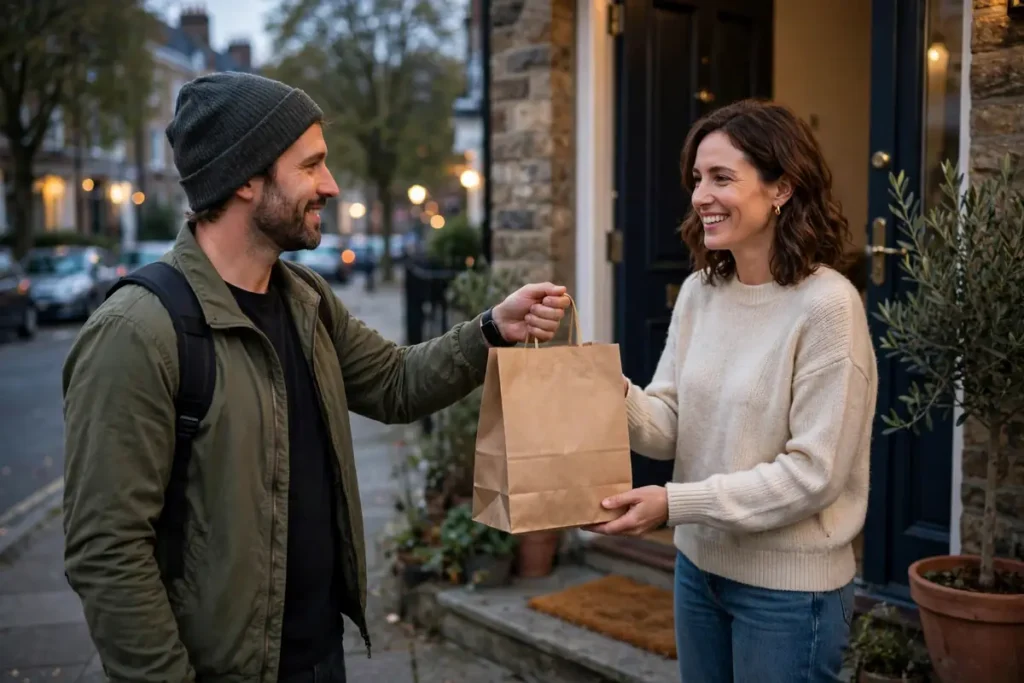
Direct answer: DoorDash has revealed that it has received only “several hundred” orders in total from third-party AI agents, a strikingly small number set against the average of 3 million deliveries a day the company reported for 2025. The disclosure, made on its third-quarter earnings call on 30 October 2026, punctures the loudest version of the agentic commerce story, in which AI assistants are already doing everyone’s shopping, while also showing that DoorDash itself takes the long-term shift seriously enough to build its own agents and court the agent makers.
What happened
The news came not from a product launch but from an earnings call, which is one reason it carries weight. On a call with analysts about DoorDash’s third quarter, chief executive Tony Xu was asked about AI agents ordering food. His answer was unusually candid for a chief executive discussing a fashionable technology. “I would say that this [using agents to order] is something that is still a very dynamic area. And my take on all things technology is you never want to fight gravity. But at the same time, you don’t want to be delusional,” Xu said. “What I mean by that is if you look at where AI agents are today, we’re seeing maybe several hundred orders in total from some of these third-party agents.”
That is the whole number, and its vagueness is part of the point. Xu did not say several hundred a day, or several hundred a week. He said several hundred in total, from third-party agents such as Muse, Instinct, Fo and others, as reported by TechCrunch. Set against DoorDash’s own scale, an average of 3 million deliveries daily according to its 2025 report, the agent channel is currently a rounding error. If the several hundred orders arrived over a whole quarter, they would represent roughly one order in every million or so deliveries. Even on the most generous reading, the channel is experimental.
Xu also gave the other side of the picture in the same answer. Users are still predominantly placing orders through DoorDash’s app, he said, which is hardly surprising for a company whose app is its storefront. But DoorDash does not want to shut agents out. The company wants to learn more about agentic use cases and develop what Xu called a healthy relationship with third-party agent makers. And he added a commercial hint: in the future, there could be an opportunity for DoorDash to advertise within these agents. That is a chief executive describing a channel that is tiny today, potentially real tomorrow, and monetisable the day after, in that order.
DoorDash’s own agents: the part of the story that is actually live
It would be wrong to read Xu’s comment as DoorDash dismissing AI agents. The company has been building its own agent features steadily through 2026, and those features are the ones its customers can actually use today. In June it launched Ask DoorDash, a chatbot that lets users place orders through prompts and photos. In July it introduced a CLI agent, a tool aimed at people comfortable working from a command line. In September it launched a text-to-order agent. It has also released an MCP, a Model Context Protocol interface, to enable ordering from other chatbots for corporate ordering.
The distinction between DoorDash’s own agents and third-party agents matters, and it is the distinction on which the whole agentic commerce debate turns. When DoorDash builds the agent, it controls the menu data, the payment flow, the confirmation step, the refund process and the customer record. When an outside agent places an order, the platform has to decide how much to trust a visitor it did not invite: is this a genuine customer instruction, is the payment authorised, what happens if the agent orders the wrong thing, and who pays for the mistake? Those questions are not theoretical. They are the reason platforms are moving at different speeds, and they explain why a single number, several hundred orders, can coexist with genuine enthusiasm for the technology.
The wider platform landscape confirms that this is an open argument, not a settled direction. Amazon has been blocking personal agents from its shopping experience, while Walmart has laid out what TechCrunch called a red carpet for them, hoping to win business from competitors. Two of the largest retailers in the world have chosen opposite strategies for the same technology in the same year. That split alone should warn any small business against betting its ordering strategy on a single prediction about agents.
Why the hype ran ahead of the numbers
Agentic commerce has had a remarkable run as a narrative in 2026. The pitch is seductive: instead of opening an app, scrolling a menu and checking out, you tell an assistant what you fancy and it sorts everything out, comparing options, applying your dietary requirements, and paying on your behalf. For a busy person, that sounds like a genuine improvement. For a technology company, it sounds like the next platform shift, the kind that rearranges who captures the customer relationship and who pays whom for access to it.
The DoorDash number is a useful reality check because it measures behaviour rather than capability. The technology to place an order through an agent demonstrably exists. DoorDash’s own agents prove it, and the several hundred third-party orders prove that outside agents can complete a purchase at least sometimes. What does not yet exist, on this evidence, is a habit. Customers are not yet asking agents to order dinner in meaningful numbers, or agents are not yet good enough, trusted enough, or integrated enough for customers to bother.
There are several plausible reasons, and they are worth separating because they point to different futures. First, trust: handing payment details and food choices to an intermediary requires confidence that it will get the order right, and food is unforgiving, since a wrong order cannot be returned like a wrong T-shirt. Second, friction: if using an agent is slower or more awkward than opening an app you already know, most people will open the app. Third, access: platforms that block or limit outside agents, as Amazon has done, reduce the places where an agent can actually complete a purchase. Fourth, value: for a routine order from a favourite restaurant, the agent adds little over a saved order in an app, so the benefit has to come from discovery, comparison or complex requirements, which are less common purchases.
None of those reasons is permanent. Trust can be built, friction can fall, access can be negotiated, and value can grow as agents get better at handling dietary needs, budgets, group orders and repeat preferences. But none of them disappears overnight either, and a business that plans as though agents already dominate ordering will misallocate money that could have gone to things customers demonstrably want today.
What it means for UK small businesses
DoorDash is an American company and its numbers describe its American business, so no one should quote “several hundred” as a UK statistic. The value of the disclosure for a UK food business is as a signal about timing, not as a local market measurement. The UK’s delivery landscape is dominated by Deliveroo, Uber Eats and Just Eat, and none of them has published an equivalent agent-order figure. What the DoorDash number tells a UK owner is that the world’s large delivery platforms are still in the learning phase on third-party agents, and that the sensible posture is preparation without panic.
The most useful way to think about it is in three layers. The first layer is the work you should already be doing, which also happens to prepare you for agents. Agents, like search engines and comparison sites, read the same structured information humans see: your menu, your prices, your opening hours, your delivery areas, your allergen information and your contact details. If those are wrong, out of date or inconsistent across platforms, an agent will confidently order the wrong thing or send a customer to a closed kitchen, and the customer will blame you, not the agent. Keeping that information accurate everywhere you are listed is the single highest-value preparation, and it helps every human customer too.
The second layer is your direct channel. If agents do grow, the businesses most exposed are the ones that depend entirely on a marketplace for orders, because the marketplace, or the agent, owns the customer relationship and can change the terms. A direct ordering option on your own website, even a simple one, with your own customer list, gives you a fallback and a margin advantage. It does not need to be elaborate: a clear menu, accurate prices, a working checkout or phone-ordering option, and a way for regulars to reorder. The firms that will benefit most from agents, if they arrive, are the ones whose data is clean and whose direct channel already works.
The third layer is policy, and it is the one most small firms have not written down. What happens when an order arrives from an agent rather than a person? Who authorises substitutions if an item is out of stock? Who pays if the agent orders the wrong dish, or orders twice? What allergen information travels with an agent order, and how do you confirm it? These are not hypothetical questions for long: as agent ordering grows, the first disputes will arrive before the first formal standards do. Having short, written answers, shared with your team and consistent with your platform agreements, will save arguments later. If your platform partner offers an agent-related setting, such as whether to accept agent orders or how substitutions are handled, read it before you accept the default.
There is also a marketing angle worth watching rather than buying into. Xu’s remark about advertising within agents points to a future in which the agent, not the app’s home screen, becomes the shelf. If that happens, visibility inside agents could become a paid channel, much as sponsored listings are inside delivery apps today. For a small restaurant, that could be either an opportunity to reach customers at the moment of decision or another fee on top of existing commission. The right response now is to watch how the large platforms price and position that inventory, and to keep your own direct channel strong so that you are never forced to buy visibility you cannot afford.
The economics behind the number
It is worth pausing on what “several hundred orders” means commercially, because the temptation is to treat it as either meaningless or catastrophic, and it is neither. For DoorDash, a company doing millions of deliveries a day, several hundred agent orders contribute nothing measurable to revenue. They are a research sample, not a business line. That is why Xu could afford to be candid: the number is too small to frighten investors, and candour about a small number buys credibility for the larger claim that the company is prepared for growth.
For an agent maker, the same number reads differently. Several hundred completed orders across several agent products suggests that the plumbing works but the demand is not yet there, or that demand exists but is blocked by platform limits, payment friction or user experience. Either reading points to a product problem rather than a market verdict. The agent companies that survive this phase will be the ones that find a specific ordering job where they are clearly better than an app, such as complex group orders, strict dietary filtering across many restaurants, or corporate catering, rather than the ones that simply replicate the app with a chat box.
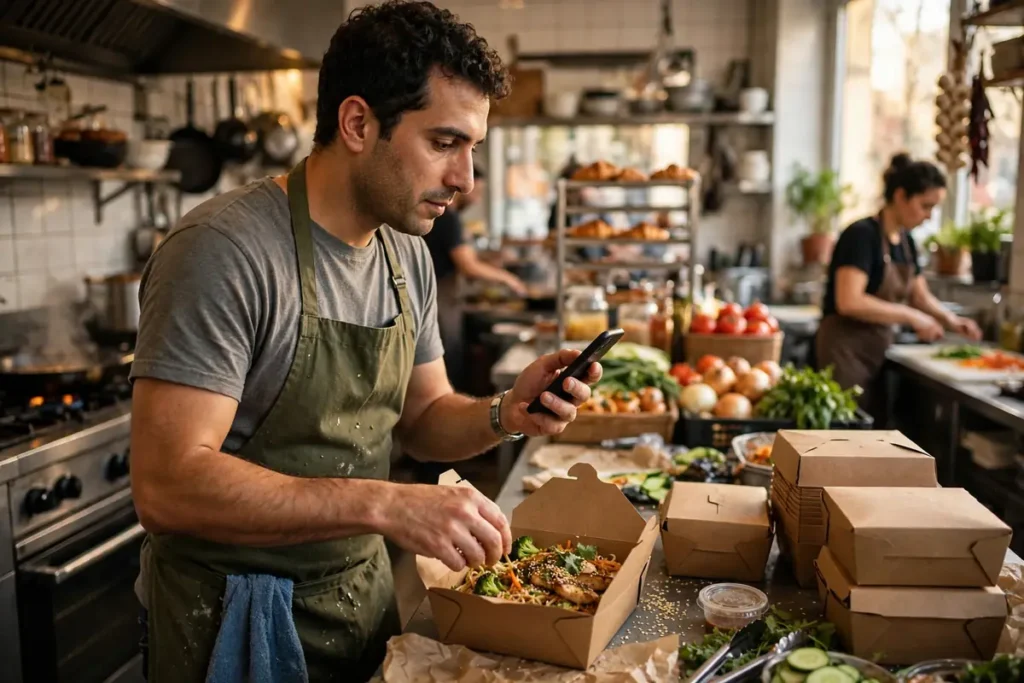
For a restaurant, the economic question is simpler: where does the next pound of investment earn its return? Today, the evidence says it earns it in the basics, in food quality, in accurate listings, in fast and friendly handling of the orders you already receive, and in a direct channel that keeps more of each sale. An agent-specific investment, such as building a custom integration for a single agent product, would be hard to justify on several hundred orders across an entire continent-sized platform. A general investment in clean data and a working direct channel is justified on today’s orders and happens to be agent-ready.
Comparisons: how other platforms are playing it
DoorDash’s position sits between the two extremes visible elsewhere in commerce. Amazon’s blocking of personal agents is the defensive extreme: protect the storefront, the recommendation engine and the advertising business from an intermediary that could strip them away. Walmart’s open approach is the offensive extreme: welcome agents in the hope that they bring incremental orders and shift share from competitors. DoorDash is doing both at once in miniature: building its own agents, where it keeps control, while keeping the door open to outside agents, where it does not.
That middle position is probably the most instructive for a small business, because it mirrors the choice every restaurant faces. You can build your own direct ordering, where you keep control, while remaining present on marketplaces, where the customers already are. You do not have to choose one world or the other, and you should be suspicious of anyone who tells you that you do. The platforms themselves have not chosen, and they have far more data than any single restaurant.
Payment providers are also part of this picture. Our earlier coverage of American Express’s intent-intelligence work for agent purchases and of Walmart’s agent gateway shows that the payments layer is being rebuilt for a world in which an agent, not a person, triggers a transaction. That work matters because payment authorisation is the hardest part of agent commerce: a system must prove that the customer really meant to buy, that the amount is correct, and that a refund is possible. Until those proofs are standard and trusted, agent ordering will stay small, however good the conversation feels.
Honest limits / what to watch
There are several limits to what this single disclosure can prove, and a careful reader should hold them in mind. First, the figure covers third-party agents only. DoorDash’s own agents may be handling far more orders, and the company did not give a number for them, so the total volume of agent-assisted ordering on DoorDash is unknown and certainly larger than several hundred. Second, “several hundred” is an approximate phrase from a spoken answer, not an audited metric, and no time window was given. Third, DoorDash is one platform in one country, and its experience may not generalise to other platforms or to the UK. Fourth, an earnings call is a performance as well as a disclosure: Xu had reasons to sound neither complacent nor delusional, and his framing serves both purposes.
What to watch next is more concrete. Watch for the next quarterly update: if the third-party agent number moves from hundreds to thousands or tens of thousands, the growth rate will matter more than the absolute figure. Watch for announcements from Deliveroo, Uber Eats and Just Eat about agent policies in the UK, since those will set the terms for British restaurants directly. Watch for payment and verification standards for agent purchases, because those will unlock scale if they arrive. Watch for whether DoorDash launches advertising inside agents, since that would signal that the channel has become commercially serious. And watch for the first public dispute about a wrong agent order, because how platforms assign responsibility in that case will shape every restaurant’s policy.
The broader lesson is one that applies well beyond food delivery. Technology narratives often describe a future as though it had already arrived, and the most useful discipline for a small business is to ask for the number. How many people actually use this, how often, and what does it cost? DoorDash, to its credit, gave a number, and the number says: not many, not yet. That is not a reason to ignore agents. It is a reason to prepare cheaply, keep your data clean, protect your direct channel, and spend your serious money on the customers who are ordering today, through the app, on the phone, and at the counter, while the agent future sorts out whether it is a platform shift or a feature.
Key facts
| Fact | Detail |
|---|---|
| Disclosure | DoorDash Q3 earnings call, 30 October 2026 |
| Who said it | CEO Tony Xu, answering an analyst question |
| Third-party agent orders | “Several hundred” in total, not per day |
| Normal scale | Average of 3 million deliveries a day, per DoorDash’s 2025 report |
| Customer behaviour | Users still predominantly order through DoorDash’s app |
| DoorDash’s own agents | Ask DoorDash chatbot (June), CLI agent (July), text-to-order agent (September), MCP for corporate ordering |
| Future commercial hint | Possible advertising within third-party agents |
| Platform split | Amazon blocking personal agents; Walmart welcoming them |
| UK relevance | No UK figure disclosed; signal about timing, not a UK market measurement |
| First action for small firms | Keep menus, prices, hours and allergen information accurate everywhere; strengthen your direct ordering channel |
FAQs
How many orders has DoorDash received from AI agents?
DoorDash CEO Tony Xu said on the company’s third-quarter earnings call on 30 October 2026 that it had seen “several hundred” orders in total from third-party agents. He did not give an exact figure or a time period beyond that total.
How does that compare with DoorDash’s normal volume?
DoorDash said in its 2025 report that it completes an average of 3 million deliveries a day. Several hundred agent orders in total is therefore a tiny fraction of one day’s normal volume, let alone of a quarter or a year.
Does this mean AI agents will not change food ordering?
No. It means they have not changed it yet at any meaningful scale on DoorDash. DoorDash itself is building its own ordering agents and says it wants a healthy relationship with third-party agent makers, which suggests it expects the channel to grow rather than disappear.
Should a UK takeaway or restaurant build for AI agents now?
Not as a dedicated project. The work that prepares you for agents is the same work that helps human customers today: accurate menus, prices and opening hours everywhere you are listed, a reliable direct ordering option, and clear policies on substitutions, refunds and allergens.
What is the difference between DoorDash’s own agents and third-party agents?
DoorDash’s own agents, including its text-to-order agent, its CLI agent and its Ask DoorDash chatbot, run inside DoorDash’s own systems. Third-party agents are built by other companies and place orders on a customer’s behalf, which raises questions about verification, payment, refunds and who is responsible when an order goes wrong.
Could agents advertise inside food ordering?
DoorDash CEO Tony Xu raised that possibility on the earnings call, saying there could be an opportunity in future to advertise within third-party agents. Nothing has been announced as a product, so treat it as a direction of travel, not a channel you can buy today.
Sources and further reading
This article is based on TechCrunch’s report of DoorDash’s third-quarter earnings call on 30 October 2026, including CEO Tony Xu’s remarks, and on DoorDash’s own 2025 delivery volume figure as reported there. Platform comparisons draw on TechCrunch’s reporting of Amazon’s blocking of personal agents and Walmart’s agent gateway.
For related reading on this site, see our coverage of agentic commerce for brands and Walmart’s AI agent gateway and Amazon’s agent blocking.