

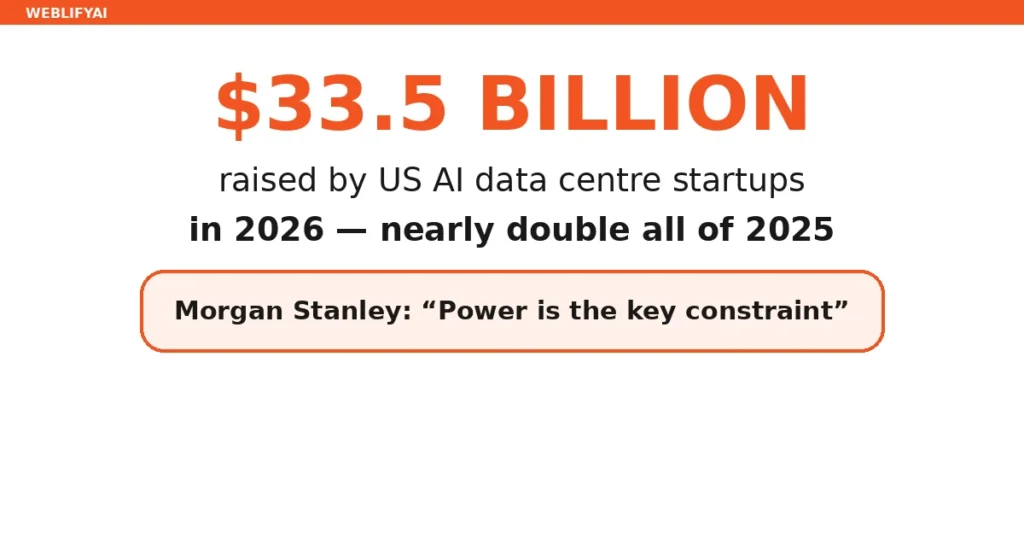
Direct answer: US startups fixing the power and computing bottlenecks behind AI data centres have raised $33.5 billion so far in 2026 — nearly double the whole of 2025 — according to a new Morgan Stanley report. The message from the bank is blunt: “power is the key constraint” holding back the AI buildout.
What happened
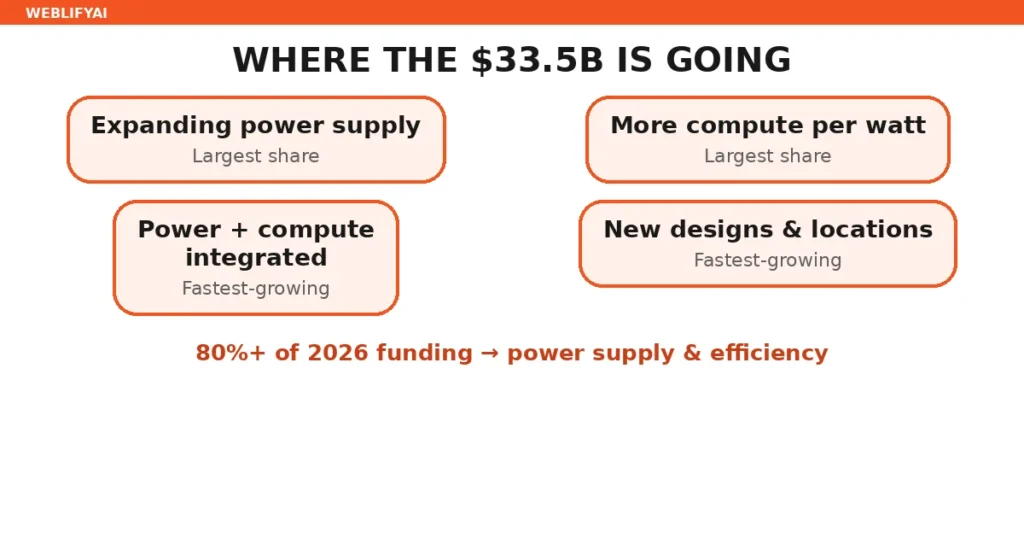
Morgan Stanley’s report, covered today by The Economic Times (via ANI), says venture funding for startups tackling AI data centre constraints has “accelerated sharply in 2026”. The money is chasing four things: expanding power supply, getting more computing performance out of each unit of electricity, integrating power and computing systems, and new data centre designs and locations. Since the start of 2024, this universe of startups has raised more than $50 billion.
Two details stand out. First, more than 80% of the 2026 funding went to companies working on expanding power availability and improving computing performance per unit of electricity. Second, the worlds of energy and computing investors are merging fast: in 2026, 73% of funding rounds in the power and computing segments included investors who had already backed companies in the other segment — up from 49% in 2024 and just 16% before 2021.
The funding surge follows a related Morgan Stanley analysis estimating US data centres face a roughly 32-gigawatt power shortfall through 2028 — about a third of the power their planned facilities need. The AI boom’s bottleneck, in other words, is no longer chips. It’s electricity.
What it means for UK small businesses
You will never buy a data centre, but this funding wave affects your AI bill. While power bottlenecks persist, running large AI models stays expensive — and those costs get passed through to you as higher subscription prices for AI tools. The smart move for a small business is the same one it always was: rent, don’t build. Use hosted AI tools from providers who absorb the infrastructure headache, and check which AI tools UK small firms are actually adopting before committing to anything heavyweight.
There is a silver lining. The flood of money into power efficiency means AI tools should get cheaper to run over time, which keeps prices competitive for the AI agents and assistants small businesses use every day. Budget for subscriptions, watch the price-per-query trend, and you stay ahead.
Honest limits / what to watch
A few caveats. This is a Morgan Stanley analyst report about US startups, reported through Indian wire coverage — it describes where venture money is flowing, not guaranteed engineering outcomes. Power projects take years to build, and grid approvals can drag. Funding “nearly double 2025” is impressive, but 2026 isn’t over and late-year rounds could shift the picture. The real test will be whether any of this actually closes the 32 GW shortfall the bank flagged.
Sources: The Economic Times (Oct 13, 2026); Morgan Stanley power shortfall analysis (Oct 6, 2026).
CTA: Get a Free AI Consultation
FAQs
How much funding did AI data centre startups raise in 2026?
US startups working on AI data centre power and computing constraints raised $33.5 billion by early October 2026, nearly double the total raised in all of 2025, according to a Morgan Stanley report.
Why is power the biggest constraint for AI data centres?
Morgan Stanley says “power is the key constraint” — data centres need enormous amounts of electricity to run AI chips, and grid capacity and approvals cannot keep up with planned expansion.
What areas are investors backing?
Four areas: expanding power supply, improving computing performance per unit of electricity, integrating power and computing systems, and new data centre designs and locations.
What does the AI power crunch mean for UK small businesses?
AI running costs may stay high while power bottlenecks persist, so small firms should favour efficient, hosted AI tools over building their own infrastructure and budget for subscription pricing.


