Direct answer: OpenAI Dots is the company’s new agent product — always-on AI co-workers powered by GPT-6 Astra, connecting to 4,000+ apps — announced at DevDay on September 29, 2026. But UK users are reportedly locked out: MIXED Reality News reports Dots excludes ChatGPT Pro subscribers in the UK, EEA and Switzerland. So the UK gets the headlines without the product — and the smart response is preparation, not frustration.
If that sentence felt like a lot, you’re not alone. Dots arrived with big claims, thin details, and a launch curve that went vertical and then flat within 48 hours. Here’s the honest breakdown: what was actually announced, who can use it, who can’t, and what UK businesses should do while the door stays shut.
What Is OpenAI Dots?
A definition first, because “agent” is doing heavy lifting in every headline right now.
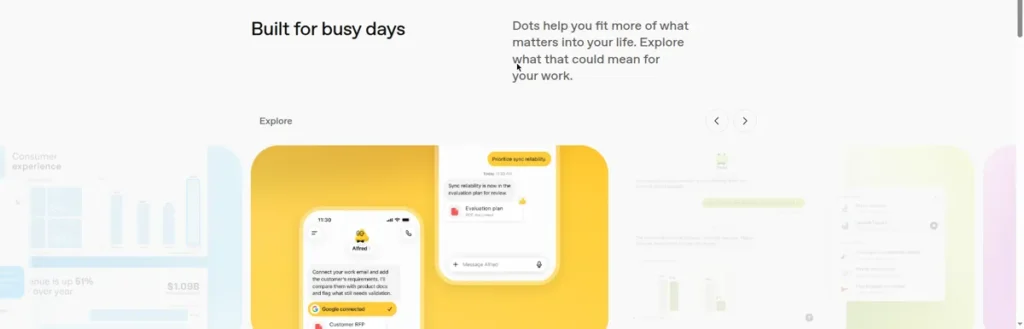
OpenAI Dots is an AI agent product: always-on AI co-workers that take action across your apps and complete multi-step work on your behalf. Not a chatbot upgrade, not a new model tier — a product whose job is doing, not telling. Chasing an invoice across three systems, preparing a campaign review from scattered data, handling the admin chain behind a customer request: that’s agent territory.
Dots runs on GPT-6 Astra, the model powering the agents, and connects to 4,000+ apps at launch — the integrations being arguably more important than the model itself. An agent with no tools is a clever talker; an agent wired into your stack is a worker. That connection count is the number to watch. (For the line between what’s confirmed and what’s still unknown, our Dots AI OpenAI explainer keeps the receipts.)
The Launch: What DevDay 2026 Actually Announced
September 29, 2026. OpenAI’s DevDay. Coverage from VentureBeat and TechCrunch carried the announcement: Dots, positioned as always-on AI agent co-workers, powered by GPT-6 Astra, connecting to more than 4,000 applications, aimed at Pro and business users.
And then — strikingly little else. No pricing. No public rollout timeline. No detailed feature walkthrough for the press to poke at. It was an announcement of intent more than an unveiling of product, which is worth remembering every time someone describes Dots as if it’s already reshaping workplaces. Announcements don’t reshape anything; shipped products do.
The Hype Curve: A Spike, Then Silence
According to Google Trends data, search interest in Dots spiked hard on September 29–30 in both the US and UK — the classic launch-day vertical — and then cooled almost as fast. The pattern tells its own story: huge curiosity, very little to actually try.
Tom’s Guide put it bluntly: most ChatGPT users can’t try Dots yet. That’s the gap between the announcement and reality in one sentence. A product can dominate headlines while remaining, for practical purposes, vapourware to the public — and Dots, as of early October 2026, sits firmly in that gap.
For businesses, the lesson is an old one wearing new clothes: never reorganise your operations around a launch video. Watch what ships, then decide.
The UK Lockout: Who Can’t Use Dots
Here’s the part that stings for British readers. MIXED Reality News has reported that Dots excludes ChatGPT Pro users in the UK, EEA and Switzerland — meaning even paying subscribers in Britain are reportedly shut out.
A few careful notes on that, because precision matters here:
- This is reported, not officially confirmed by OpenAI. OpenAI hasn’t published a clear UK availability statement either way.
- The exclusion reportedly covers Pro users specifically — the very people you’d expect to get first access.
- No official reason has been given. The plausible backdrop is regulatory caution: the EEA’s AI rulebook has slowed or reshaped several US product launches, and the UK often lands in the same cautious bucket. That’s informed context, not a confirmed explanation.
The practical upshot is simple: don’t plan around UK access until OpenAI itself announces it. Roadmaps built on reported lockouts are as shaky as roadmaps built on launch videos.
The Shopping Angle: Why Brands Suddenly Care
Now the thread that connects Dots to your bottom line. Forbes ran the headline that says it all: “Meta Muse And ChatGPT Dots Can Shop For You — Now Brands Want In.”
Both agents — Meta’s Muse and OpenAI’s Dots — are positioned to shop on a user’s behalf: comparing products, recommending options, completing purchases. That makes the agent the new middleman between customer and checkout. And middlemen decide who gets the sale.
This is already a live fight, not a future one. Amazon has reportedly moved to block Meta’s Muse from its shopping flows (covered by GeekWire and CNBC in late September 2026) — the first big turf war over who controls the recommendation layer. When two trillion-dollar ecosystems wrestle over the right to recommend products to your customers, it’s worth paying attention to the mat they’re fighting on.
For a UK business, the implication is direct: there is a new layer forming between your products and your buyers, and it recommends in sentences, not search results. Being the business the agent names is the new ranking #1. We’ve written the playbook for exactly this in our Dots AI OpenAI explainer.
Dots vs Muse: Where UK Users Stand
The honest side-by-side, UK edition:
| OpenAI Dots | Meta Muse | |
| What it is | Always-on agent co-workers (announced) | Personal AI agent (launched) |
| Announced / launched | Sep 29, 2026 (DevDay) | Sep 8, 2026 |
| Powered by | GPT-6 Astra | Meta’s agent stack, secure VM |
| App connections | 4,000+ claimed | Business connectors (small-biz rollout Sep 29) |
| UK availability | Reportedly excluded (UK/EEA/CH) | Not confirmed — no UK date |
| Public access | Most can’t try it yet (Tom’s Guide) | Live in US, Canada |
| Shopping angle | Positioned to shop for users (Forbes) | Positioned to shop; Amazon blocking (reported) |
Neither is confirmed available in the UK. So for British businesses, “which is better?” is the wrong question. The right one: which behaviours will both of them reward? And the answer is the same for both: verifiable, well-structured, trustworthy business information.
7 Things UK Users Need to Know
1. Dots is an agent play, not a chatbot upgrade
The industry has picked its next battlefield and it isn’t better chat — it’s software that completes multi-step work. Dots, Muse, and whatever follows are all bets on the same idea: the assistant that does. Understand that shift and every announcement starts making sense.
2. It’s extremely early — treat it as a signal, not a tool
Launch-day spike, 48-hour cool-down, almost nobody able to try it. Dots today is a statement of direction from OpenAI, not something you can deploy on Monday. File it under “watch closely,” not “buy now.”
3. The UK lockout is real (reportedly) — and instructive
Even Pro subscribers in the UK, EEA and Switzerland are reportedly excluded. Whatever the reason, the pattern is familiar: ambitious AI products keep tripping at Europe’s regulatory border. Build your plans on what’s available here, not what’s announced there.
4. The 4,000+ app connections matter more than the model name
GPT-6 Astra is the headline; the integrations are the product. An agent’s value is the tools it can touch — your CRM, your inbox, your shop, your calendar. When evaluating any agent, ask “what can it actually reach?” before “how smart is it?”
5. Shopping is the battleground both agents are fighting over
Forbes called it: both Dots and Muse can shop for users, and brands want in. The Amazon–Muse standoff shows how high the stakes are. If you sell anything, your product data is now competing for an AI’s recommendation, not just a human’s click.
6. Make your business machine-readable now
Structured product and service data on your site. Identical business details everywhere online. Genuine reviews. Clear pages that answer buyer questions directly. This is the unglamorous work that makes you the business an agent can verify — and therefore recommend. Start with our generative AI SEO guide.
7. Keep a list of honest unknowns — and ignore anyone who fills them in
No confirmed pricing. No confirmed UK timeline. No public access for most users. No official explanation for the lockout. Anyone selling you Dots expertise, Dots optimisation services, or Dots timelines right now is selling certainty that doesn’t exist. The most valuable thing you can do is stay informed without being sold to.
FAQs
What is OpenAI Dots?
Dots is OpenAI’s agent product, announced at DevDay on September 29, 2026: always-on AI agent co-workers powered by GPT-6 Astra, connecting to 4,000+ apps. It’s software that does multi-step work across your tools, rather than just answering questions. See our Dots AI OpenAI explainer for the confirmed-vs-unknown breakdown.
When was OpenAI Dots announced?
September 29, 2026, at OpenAI’s DevDay 2026. VentureBeat and TechCrunch covered the announcement. According to Google Trends data, search interest spiked September 29–30 in both the US and UK, then cooled quickly.
Can I use OpenAI Dots in the UK?
Reportedly not yet. MIXED Reality News reports that Dots excludes ChatGPT Pro users in the UK, EEA and Switzerland. OpenAI hasn’t published a clear UK availability statement, so treat the lockout as reported rather than officially confirmed — but don’t plan around UK access until OpenAI says otherwise.
Why is Dots unavailable in the UK and EEA?
OpenAI hasn’t given an official reason. The plausible backdrop is regulatory caution — the EEA’s AI rules have slowed several US product launches — but that’s informed context, not a confirmed explanation. Watch for OpenAI’s own statement rather than trusting speculation.
How is Dots different from ChatGPT?
ChatGPT is conversational: you ask, it answers. Dots is positioned as agentic: always-on co-workers that take action across your apps and complete multi-step jobs. Doing versus telling — that’s the whole distinction.
How much does OpenAI Dots cost?
Unknown. OpenAI has announced no Dots pricing — no tiers, no per-seat business pricing, nothing. It’s aimed at Pro and business users, which suggests paid tiers, but that’s inference. Any figures you see quoted are speculation.
Dots vs Muse — which agent is better for business?
Too early to call. Muse is launched and documented, with a small-business rollout and confirmed features; Dots is an announcement with big claims and almost no public access. Our Muse AI vs Dots AI comparison compares what’s actually confirmed. For UK users, neither is confirmed available — so preparation beats purchase.
How can my business get visible to AI agents like Dots?
Be the business an agent can verify: structured product and service data, consistent listings everywhere, genuine reviews, and clear pages answering buyer questions directly. When agents shop for users, machine-readable means recommendable. Our generative AI SEO guide is the full playbook.