

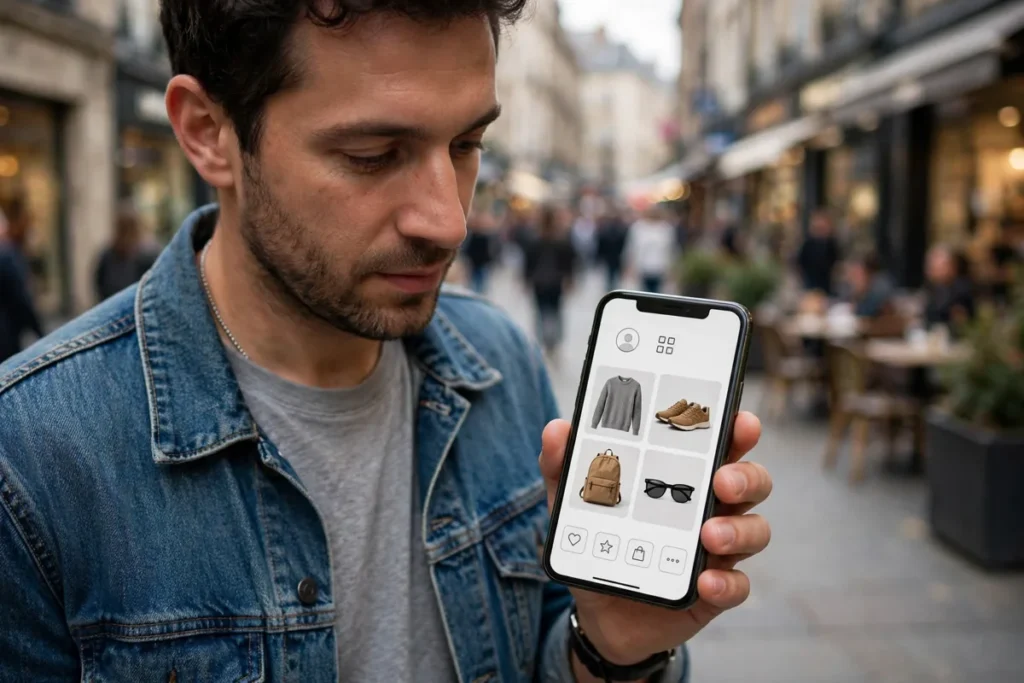
Direct answer: Airship has announced new capabilities built on its Decisioning AI that move the moment of choice onto the customer’s own phone, rather than waiting for a distant server to decide what should appear. The idea is simple to grasp, even if the engineering behind it is not: when a screen loads, the app weighs what it already knows about that customer against what is happening right now, in that session, and picks the most relevant experience on the spot. For UK small businesses, the interesting part is less the technology itself than the shift it represents — away from broad segments and slow, batch personalisation, and towards timely, in-the-moment relevance that respects the customer’s device as the place where the decision happens.
What happened
On 27 October 2026, Airship, a mobile-first customer experience company, announced new capabilities built on Airship Decisioning AI for modern mobile platforms such as iOS 27. The announcement, carried by Business Wire, frames the release as a way to activate customer insights and real-time context through a single platform. In other words, rather than stitching together several tools to decide what a customer should see next, a brand would work from one place that brings together what it knows about the customer and what is happening in the current session.
That single-platform point matters more than it might first appear. Many businesses, large and small, have ended up with a familiar patchwork: one system holds customer profiles, another sends messages, a third runs the app, and a fourth tries to make sense of the results. When those systems do not talk to each other cleanly, personalisation tends to arrive late, feel generic, or depend on a developer to wire up every new journey by hand. Airship points to exactly those problems in its announcement — siloed data, disconnected systems, and developer dependencies — as the obstacles that have kept personalisation from feeling genuinely personal.
The new capabilities are presented as an answer to that tangle. At their centre is on-device decisioning AI, which evaluates contextual logic locally, on the user’s device, when a screen loads. Around it sit several supporting pieces: zero-copy data integrations, external data feeds, a feature called Data Branching, automated action triggers, and built-in analytics. Each of those does a distinct job, and each is worth understanding on its own, because together they describe a different way of thinking about how a mobile experience is put together.
Airship also puts the launch in a broader commercial context. It cites research from Deloitte and Meta stating that 80% of US consumers are more likely to purchase from brands offering personalised experiences. That figure, on its own, does not prove that any particular tool will lift sales for any particular business. What it does suggest is that customers have come to expect a degree of relevance as a matter of course, and that a plain, one-size-fits-all message now feels like a missed opportunity rather than a safe default. The bar, in short, has moved. Relevance is no longer a nice extra layered on top of a campaign; for many customers, it is part of what makes a brand feel worth engaging with at all.
The people behind the announcement make the same point in their own ways. Chief Executive Brett Caine is quoted as arguing that relevance at scale is the new standard, and points to more than 15 years of mobile expertise across billions of customer journeys, with value tied to business outcomes and backed by an Airship Results Guarantee. Chief Technology Officer Mike Herrick draws attention to the instant a screen loads, arguing that waiting on the cloud costs a brand that moment. The picture he paints is one in which the brand brings its warehouse knowledge, the app adds in-the-moment context, and the right experience is chosen instantly. David LoPresti, Director of Mobile Experience at U-Haul, adds a practitioner’s note: segments, he suggests, hide the differences within them, and combining on-device AI with a company’s own models adds nuance that segment-based targeting alone misses. For him, this is no longer a technology challenge — a telling remark from someone whose job is to make mobile experiences work for real customers at scale.
There is also a near-term chance to see the technology demonstrated rather than merely described. Airship is the lead sponsor of Elevate’26 London, taking place on 4–5 November 2026, and live demos are planned there. Brett Caine is due to open the summit, and Mike Herrick is set to join David LoPresti to demonstrate on-device AI in production. Other speakers are listed from Gartner, Vodafone, Air France, One Football, BBC, M6, DAZN, Musgrave and The Very Group — a deliberately broad line-up that underlines how widely mobile customer experience now reaches, from media and sport to retail and travel.
For context, Airship describes itself as a cross-channel customer experience platform used by thousands of top global brands, and claims to have invented the first push notification, the first mobile boarding pass, the first live activity and the first intelligent agent fleet. Those claims are part of the company’s own account of its place in mobile history, and they help explain why it is positioning this launch as a continuation of that story rather than a one-off feature. The through-line is consistent: each of those earlier milestones was about reaching the customer in the moment, on the device in their hand. On-device decisioning is, in that telling, the next step in the same direction — not merely sending a message to the phone, but deciding, on the phone, which experience that message or screen should carry.
It is worth being clear about what this announcement is and is not. It is a product announcement from a vendor, reported through Business Wire and covered in the trade press, not an independent study of results across small businesses. No pricing, rollout timetable for individual customers, or performance figures for UK small businesses are given in the material used for this article, and none are invented here. What can fairly be said is that a significant mobile platform is betting, publicly and in some detail, that the future of personalisation is local, immediate and context-aware — and that bet itself is news for any business that relies on an app or on mobile messaging to keep customers close.
Key facts at a glance
| Fact | Detail |
|---|---|
| Company | Airship, a mobile-first customer experience company |
| Announcement date | 27 October 2026, via Business Wire |
| Product | New capabilities built on Airship Decisioning AI |
| Platforms mentioned | Modern mobile platforms such as iOS 27 |
| Core idea | Customer profile data paired with real-time context, decided on the device |
| Decision point | When a screen loads, using active session signals |
| Data approach | Zero-copy integrations with leading data warehouses; no duplication of data |
| Live inputs | External feeds such as weather or store inventory, pulled in at render time |
| Routing feature | Data Branching, routing each user down the best path without developer resources |
| Automation example | Helping complete abandoned shopping carts |
| Analytics | Real-time data streamed back to the brand’s warehouse in open Parquet format |
| Governance cited | ISO 42001 certification; privacy-by-design principles |
| Consumer context cited | Deloitte and Meta research: 80% of US consumers more likely to purchase from brands offering personalised experiences |
| Live demos | Elevate’26 London, 4–5 November 2026; Airship is lead sponsor |
Timeline
- 27 October 2026: Airship announces the new Decisioning AI capabilities through Business Wire.
- 4–5 November 2026: Elevate’26 London takes place, with live demos planned, the summit opened by CEO Brett Caine, and CTO Mike Herrick demonstrating on-device AI in production alongside U-Haul’s David LoPresti.
How on-device decisioning actually works
To understand why Airship is making a fuss about decisions happening on the device, it helps to start with the more familiar alternative. In a traditional, server-side setup, the chain of events looks roughly like this: a customer opens an app, the app asks a remote server what to show, the server looks up that customer’s profile, runs its rules or models, and sends back an answer. If the connection is fast and the server is responsive, the customer may never notice the round trip. If it is slow, congested or momentarily unavailable, the screen may load late, show a generic fallback, or flash one version of content before swapping to another. Multiply that by every screen, every session and every customer, and small delays start to add up — in cost, in complexity, and in the quality of the experience.
On-device decisioning shortens that chain dramatically. The logic for choosing an experience lives, in the relevant part, on the phone itself. When a screen loads, the device looks at the signals available to it in that moment — which screen the customer is on, what is in their cart, what they have just tapped or browsed in the app — and combines those signals with profile information it has access to. It then selects the experience that best fits that combination, right there, without waiting for a server to weigh in. Airship describes this as eliminating server delays and reducing cloud compute overhead, and the reasoning is straightforward: a decision that does not need to travel to a data centre and back cannot be slowed down by that journey, and a server that does not have to answer every single decision request carries less load.
That does not mean the cloud disappears from the picture. It means its role changes. Instead of being the bottleneck through which every micro-decision must pass, it becomes the place where knowledge is gathered, organised and refreshed — and from which the device can draw when it needs to. This is where the zero-copy data integrations come in. In plain terms, zero-copy means the system reads profile data directly from a leading data warehouse without making a separate copy of it somewhere else. Anyone who has worked with spreadsheets, customer lists or marketing tools will recognise the problem this solves: once you copy data into a second system, you have two versions of the truth, and they drift apart. One gets updated, the other does not, and before long nobody is quite sure which one to trust. Reading directly from the warehouse avoids that duplication. It also means the profile data informing a decision is the data the business already maintains, rather than a stale export sitting in a marketing tool.
External data feeds add a further layer of timeliness. Airship says live information such as weather or store inventory can be pulled into messages at render time — that is, at the moment the message or screen is actually put together, not hours earlier when a campaign was scheduled. The practical difference is easy to picture. A message drafted on a sunny morning does not need to go out unchanged on a rainy evening. An offer tied to stock does not need to promote an item that sold out at lunchtime. By pulling the live fact in at the last responsible moment, the experience stays honest to the conditions the customer is actually in, rather than the conditions that existed when someone pressed send.
Data Branching is the feature that turns those inputs into a journey. Rather than sending every customer down the same path, or splitting them into a handful of pre-built segments, it routes each user down the best path based on real-time, on-device context — and, notably, Airship says this requires no developer resources. For non-technical teams, that last point is significant. In many organisations, even a small change to an app journey — a different message for returning customers, a shortcut for someone mid-checkout — has meant a ticket, a sprint and a wait. A tool that lets a marketing or customer-experience team shape those branches themselves, within guardrails, shortens the distance between spotting an opportunity and acting on it. It also reduces the risk that a good idea dies quietly in a backlog because it was never quite important enough to justify developer time.
Automated action triggers work in a similar spirit. The example Airship gives is helping to complete abandoned shopping carts — one of the oldest and most familiar problems in digital commerce. The principle is broader than carts, though: when the device can see that a customer has started something and stalled, it can respond in the moment, while the intent is still warm, rather than hours later with a generic reminder. The difference between “we noticed you left something behind” sent the next morning and a helpful nudge offered while the customer is still browsing is not just a matter of timing; it is a matter of relevance. One feels like a system catching up. The other feels like a shop assistant noticing you pause and offering a hand.
Built-in analytics closes the loop. Airship says real-time data streams back to the brand’s warehouse in open Parquet format. Parquet is an open, column-based format widely used for analytical data, and the word “open” does a lot of work here: it signals that the results are not locked inside a proprietary reporting screen, but returned in a form the business can analyse with its own tools. For a small or mid-sized business, that matters because it means measurement is not an afterthought bolted onto the campaign. The business can see what happened, in its own warehouse, and connect it to the wider picture of sales, service and retention — rather than relying solely on a vendor dashboard that shows only what the vendor chooses to show.
Privacy is woven through the announcement rather than treated as a footnote. Because customer data stays on the device, the sensitive work of combining profile and context does not require shipping that combination to a server for every decision. Airship also points to its ISO 42001 certification — the global standard for Artificial Intelligence Management Systems — and to privacy-by-design principles, naming enterprise security, legal and product teams as audiences for that governance story. For a UK reader, the important thing is not to treat a certification as a substitute for judgement. A standard can show that a management system exists and has been assessed; it does not remove the need for a business to understand its own data, its own lawful basis for using it, and its own responsibilities to customers. That judgement still belongs to the business using the tool, and any business adopting this kind of technology should take proper advice on its own position rather than relying on a vendor’s announcement as legal comfort.
A worked example helps tie the pieces together. Imagine a customer opens a retail app on a rainy Tuesday evening. The app knows, from the warehouse, that this customer has bought from the business before and tends to browse a particular category. On the device, in this session, the signals show they have just looked at two items, added one to the cart, and paused on the delivery-options screen. An on-device decision can weigh all of that at once: a returning customer, an item in the cart, a hesitation at delivery. It might surface a clear delivery message, a relevant incentive, or a simpler route to checkout — whatever the business has defined as the best path for that combination. A server-side system could, in principle, reach the same answer. The difference is that it would have to be asked, wait for the answer, and hope nothing changed in between. The on-device approach makes the decision where the customer already is, with the freshest signals available, and without the round trip.
It is also worth understanding what on-device decisioning is not. It is not the same as a phone simply displaying a pre-written message. The message, offer or screen is still chosen — the choice is just made locally, from rules and context the business has set, rather than remotely. Nor does it mean the business loses visibility. The analytics stream exists precisely so that the business can learn from what happened, even though the decision itself was made on the device. And it does not remove the need for good judgement about what to offer in the first place. A fast, local decision to show the wrong thing is still the wrong thing, delivered more efficiently. The technology changes where and how quickly the choice is made; it does not, by itself, make the choice a good one.

What it means for UK small businesses
For most UK small businesses, the first question about a launch like this is not “how does it work?” but “does it matter to me?” The honest answer is: it depends on how your customers reach you, and how much of your business already runs through a phone. If you have no app, no mobile messaging and no plans for either, Airship’s announcement is best read as a signal about where the market is heading, not as a tool to buy tomorrow. If, on the other hand, customers already book, browse, order or message you from their phones, the ideas behind it are directly relevant — whether you ever use Airship itself or not — because they describe what customers will increasingly expect from every mobile experience they touch.
Start with the expectation shift. Customers do not judge your app against other businesses your size. They judge it against the smoothest experiences they use every day, from the largest brands on their phone. When a big retailer remembers what was in their cart, a food app suggests something sensible for a rainy evening, or a travel app surfaces exactly the booking detail they need without making them hunt for it, that becomes the quiet benchmark. A small business does not need to match a global brand feature for feature, but it does need to avoid the opposite impression: a generic blast sent to everyone, a checkout that forgets what the customer just did, or a message that arrives long after the moment it related to has passed. On-device decisioning is one technical answer to that expectation, but the expectation itself is the point. Timeliness and relevance are becoming part of good service, not a luxury layered on top of it.
For app-owning retailers, the most immediate application is the shopping journey. Consider a small independent retailer with its own app or a branded ordering app: a customer browses, adds to the basket, and hesitates. A timely, relevant response — a clear delivery window, a reminder of a loyalty benefit, a simple way to finish the purchase — is worth far more than a discount code emailed the next day to everyone who abandoned a cart that week. The same logic applies to replenishment and repeat purchase. A customer who buys the same product every few weeks does not need a generic catalogue; they need the right item, at the right moment, with as little friction as possible. The discipline here is to map the handful of moments that actually matter — first purchase, repeat purchase, cart hesitation, delivery, post-purchase care — and to make each one as smooth and relevant as the business can, before worrying about cleverness for its own sake. For a broader look at how targeted messaging supports smaller firms, see this guide to AI email marketing for small businesses in the UK.
Hospitality businesses offer a second, very tangible example. A café, restaurant, hotel or takeaway that takes bookings or orders through an app lives or dies on timing: lunch rushes, quiet Tuesdays, weather changes, local events, and the difference between a first-time visitor and a regular. A message that reflects live conditions — a quiet-period offer when tables are free, a reminder that respects a customer’s usual order, a booking prompt that arrives before the weekend rather than during it — will outperform a fixed weekly blast, not because it is more technologically impressive, but because it fits the customer’s day. The on-device idea translates here into a simple principle: use what you know about the moment, not just what you knew about the customer last month. A regular who always orders the same thing does not need to be sold the full menu every time. A first-time booker does not need a loyalty message for a loyalty scheme they have not joined. Small distinctions, applied consistently, are what make a business feel attentive rather than automated.
Gyms, studios and clinics face a related version of the same challenge, with an extra layer of trust. A member who has not booked in three weeks, a patient who needs a follow-up, a client who always books the same class: each of these is a moment where a well-timed, relevant nudge helps, and a generic message irritates. The risk in health, fitness and care settings is that personalisation can easily tip into intrusion if it draws on sensitive information carelessly. The lesson from Airship’s privacy emphasis is therefore especially relevant here: keep decisions grounded in information the customer has willingly shared for that purpose, keep the data handling as local and limited as it can be, and be transparent about what you are doing and why. A gym that reminds a member about a class they enjoy is being helpful. A clinic that messages about a condition in a way that feels exposed or out of context is not. The technology does not make that judgement; the business does, and it should be made deliberately, with advice where needed, before any automation is switched on.
Trades and service businesses with booking apps — plumbers, electricians, cleaners, beauty and grooming services, tutors, repair shops — can apply the same thinking in a simpler form. The valuable moments are usually few and obvious: a booking confirmation that contains everything the customer needs, a reminder at the right time, a straightforward way to reschedule, a follow-up after the job is done, and a sensible prompt to rebook when the interval makes sense. None of that requires a sophisticated AI system to be worthwhile. What the Airship announcement highlights is that the businesses doing this well are moving from “send the same message to everyone at the same time” towards “respond to what this customer is doing right now”. Even without on-device AI, a small business can adopt that mindset: segment less by crude labels and more by behaviour, time messages to the customer’s journey rather than the business’s calendar, and remove steps from the path between interest and booking. Live chat and messaging play a supporting role here too, because a customer who is stuck mid-booking often wants a human answer quickly, not another automated push; this overview of AI live chat for small businesses in the UK sets out how that channel can complement, rather than replace, timely messaging.
There are also practical lessons for businesses that do not yet have an app but are considering one. First, do not start with the technology. Start with the customer journey, written out in plain language: how does someone discover you, decide, book or buy, pay, receive, and come back? Where do people stall, drop off, or ask the same question twice? Those are the moments where relevance pays. Second, think about data hygiene before automation. A business whose customer records live in three spreadsheets, a booking system and someone’s inbox will struggle to personalise anything, however good the tool, because there is no reliable single picture to personalise from. Tidying that up — one clean record per customer, kept up to date, with clear consent for marketing contact — is unglamorous work, but it is the foundation everything else rests on. Third, keep the human route obvious. The best mobile experience is one where automation handles the routine and a person is easy to reach when it matters. If a customer cannot find a phone number, a chat option or a way to change a booking, no amount of personalisation will compensate.
Measurement deserves its own place in any small-business playbook. Airship’s emphasis on analytics streaming back to the brand’s warehouse is a reminder that personalisation without measurement is guesswork. For a small business, measurement does not need to mean a data warehouse or a dashboard full of charts. It can mean, quite simply: for each message or journey change, decide in advance what success looks like — more completed bookings, fewer abandoned carts, more repeat visits — and then check, honestly, whether it happened. Compare like with like. Run one change at a time where you can. And be wary of vanity numbers: opens and taps feel good, but they are not the same as bookings, sales or retained customers. A message that is opened by everyone and converts no one has not worked, however clever it looked. Equally, a quieter change that removes a step from checkout and lifts completion by a small amount, week after week, is worth more than a flashy campaign that spikes once and fades.
A final point for UK small businesses is about proportion. Airship is an enterprise-grade platform used by large global brands, and its announcement should not be read as a suggestion that a small firm needs enterprise software to compete. The value for a smaller business is in the principles: decide in the moment where you can, use live context rather than stale batches, avoid duplicating customer data across systems, keep the number of steps between interest and action as low as possible, and measure outcomes rather than activity. Those principles can be applied with modest tools, careful processes and good judgement, long before any business needs on-device AI in the strict technical sense. What the launch does is show the direction of travel, and give smaller businesses a clear picture of what “good” will increasingly look like from the customer’s side of the screen.
Honest limits / what to watch
No product announcement should be taken at face value, and this one is no exception. The first limit is the most basic: the material available for this article is vendor announcement and trade coverage, not independent testing. Airship’s claims about eliminating server delays, reducing cloud compute overhead, and routing users without developer resources are the company’s description of its own product. They may well be accurate, but a small business should treat them as claims to be evaluated in a trial or a conversation with the vendor, not as proven results for businesses of its size or in its sector. Ask for specifics that matter to you: what does setup actually involve, what happens when a device is offline or on an older operating system, and what does support look like when something goes wrong on a customer’s phone rather than on a server you control?
A second limit concerns the consumer statistic. The Deloitte and Meta research cited by Airship — that 80% of US consumers are more likely to purchase from brands offering personalised experiences — describes US consumers, not UK small-business customers specifically. It is a useful indicator of direction, but it is not a promise that personalisation will lift results by any particular amount in a UK context, and it says nothing about which kind of personalisation works, for which customers, or at what cost. Businesses should be equally careful about the reverse error: assuming that because customers like personalisation in general, they will welcome every personalised message in particular. Relevance that feels helpful in one context can feel intrusive in another, especially if it draws on data the customer did not expect you to use, or arrives at a moment when they did not ask to be sold to.
Privacy and data protection form the third area to watch, and the most important for UK businesses. Airship’s emphasis on data staying on the device, privacy-by-design principles and ISO 42001 certification is genuinely encouraging, and it reflects a real shift in how responsible platforms think about AI. But a vendor’s certification is not a transfer of responsibility. Under UK data protection law, the business that decides why and how customer data is used remains accountable for that decision, and getting it wrong can damage trust far faster than any campaign can rebuild it. This article is not legal advice, and it does not attempt to summarise the law. The practical takeaway is simpler: before adopting any personalisation tool, be clear about what data you hold, where it came from, what you have permission to do with it, how long you keep it, and how a customer can ask you to stop. Take proper advice on your own position, document your decisions, and prefer tools and settings that minimise data collection rather than maximise it. If a feature would require you to use data in a way you would struggle to explain plainly to a customer, that is a reason to pause, not to proceed quietly.
There are also operational questions that any announcement leaves open. Pricing, contract terms, minimum volumes and the level of support available to smaller customers are not covered in the material used here, and they often determine whether an enterprise platform is a realistic option for a small business at all. Integration effort matters too: zero-copy access to a warehouse is a powerful idea, but it presupposes that a business has a warehouse, or at least a clean, central customer record, to connect to. A business whose data is scattered will need to do that groundwork first, and should budget time and cost for it honestly. Similarly, “no developer resources required” is a claim about shaping journeys once the platform is in place; it does not mean there is no setup, no design work, and no ongoing care. Someone still has to decide what the right experience is for each path, write the words, choose the offers, and review the results. That human work is where personalisation succeeds or fails, and it cannot be automated away.
Device and platform coverage is another sensible question. The announcement mentions modern mobile platforms such as iOS 27, which raises the obvious follow-up: what happens for customers on older devices, older operating systems, or Android handsets with different capabilities? A business whose customers use a wide range of phones should ask how the experience degrades gracefully, and what those customers see instead. The worst outcome would be a two-tier experience in which newer phones get a polished journey and everyone else gets something broken or neglected. Good design plans for the full range of devices real customers actually carry, not just the newest ones shown in a demo.
Finally, watch for the temptation to over-automate. A tool that can respond instantly to every signal can also respond too often, too eagerly, or with too little restraint. A customer who receives three well-timed messages in a day may still experience them as three interruptions, however relevant each one seemed in isolation. Frequency, timing and the ability to opt out cleanly matter as much as relevance. The businesses that will benefit most from this kind of technology are likely to be those that use it sparingly, in the moments where it genuinely helps the customer, and leave the rest alone. Restraint, in other words, is part of the strategy — not a brake on it.
What to watch, then, is not just the technology itself but how it is adopted in practice over the coming months: whether independent coverage and user reports confirm the claimed benefits, how pricing and support work for smaller customers, what the Elevate’26 demos reveal about real production use rather than staged examples, and whether other platforms follow the same on-device direction. If they do, on-device decisioning may become a standard expectation rather than a differentiator. If they do not, it will remain one vendor’s approach among several. Either way, the underlying lesson stands: customers reward businesses that respond to their actual moment, with respect for their data and their attention. That lesson does not depend on any single product, and it is one UK small businesses can start applying today.
FAQs
What is Airship Decisioning AI?
Airship Decisioning AI is the technology behind Airship’s newly announced capabilities for choosing the right customer experience in the moment. In plain terms, it pairs what a brand knows about a customer with real-time context from their current session, and uses that combination to select the most relevant screen, message or journey. The distinctive part of this launch is that those decisions can run on the customer’s device itself, when a screen loads, rather than waiting for a remote server to decide.
How is on-device decisioning different from traditional personalisation?
Traditional personalisation often relies on segments — groups of customers who share a broad characteristic — or on a server deciding what to show each time a screen loads. Segment-based personalisation can miss important differences within a group, because two customers in the same segment may be doing very different things right now. Server-side personalisation can be slowed by the round trip to a data centre and back. On-device decisioning aims to address both points: it uses live, in-session signals such as the current screen, cart status and in-app behaviour, and it makes the choice locally, without that round trip.
What does zero-copy data integration mean?
Zero-copy means the system reads profile data directly from a leading data warehouse without duplicating it into a separate copy. That matters because duplicated data tends to drift out of date: one copy gets updated and the other does not, leaving nobody sure which version to trust. By reading directly from the warehouse, the decision is informed by the data the business already maintains, rather than by a stale export. For a smaller business, the broader lesson is the same even without a warehouse: keep one clean, up-to-date customer record, and avoid scattering copies of it across disconnected tools.
Does customer data staying on the device solve privacy compliance?
Not on its own, and it would be a mistake to treat it as a complete answer. Keeping data on the device and designing for privacy from the start are positive steps, and Airship points to its ISO 42001 certification and privacy-by-design principles in support of that approach. But a UK business remains responsible for its own decisions about what data it collects, why it uses it, what permission it has, and how long it keeps it. Any business considering this kind of tool should take proper advice on its own position, be transparent with customers, and prefer the minimum data needed to do the job well. This article is general information, not legal advice.
Should a UK small business buy Airship because of this announcement?
Not necessarily, and certainly not on the basis of an announcement alone. Airship is an enterprise-grade platform used by large global brands, and pricing, setup effort and suitability for smaller customers are not covered in the announcement material used here. The more useful response for most small businesses is to take the principles seriously — timelier relevance, live context, cleaner data, fewer steps to booking or purchase, and honest measurement — and to apply them with whatever tools fit their size and budget. If an app or mobile messaging is central to your business, it is worth watching the Elevate’26 demos and asking vendors, including Airship, how their approach would work for a business like yours in practice.
Original sources: Airship announces next-generation AI capabilities, Business Wire, 27 October 2026 and Destination CRM coverage.